AI-Assisted Coding Interviews: Prompting, Reviewing AI Output, Testing, and Handling the Twist
How to pass coding rounds where you work with an AI assistant. What these rounds measure and how candidates fail them, orientation in an unfamiliar codebase, scoped prompts, a review routine for AI diffs and the mistakes assistants make most, testing before you trust, re-planning when the requirements change, narrating your decisions and pacing the sixty minutes, then three full worked rounds in Python, TypeScript and Java.
Course Overview
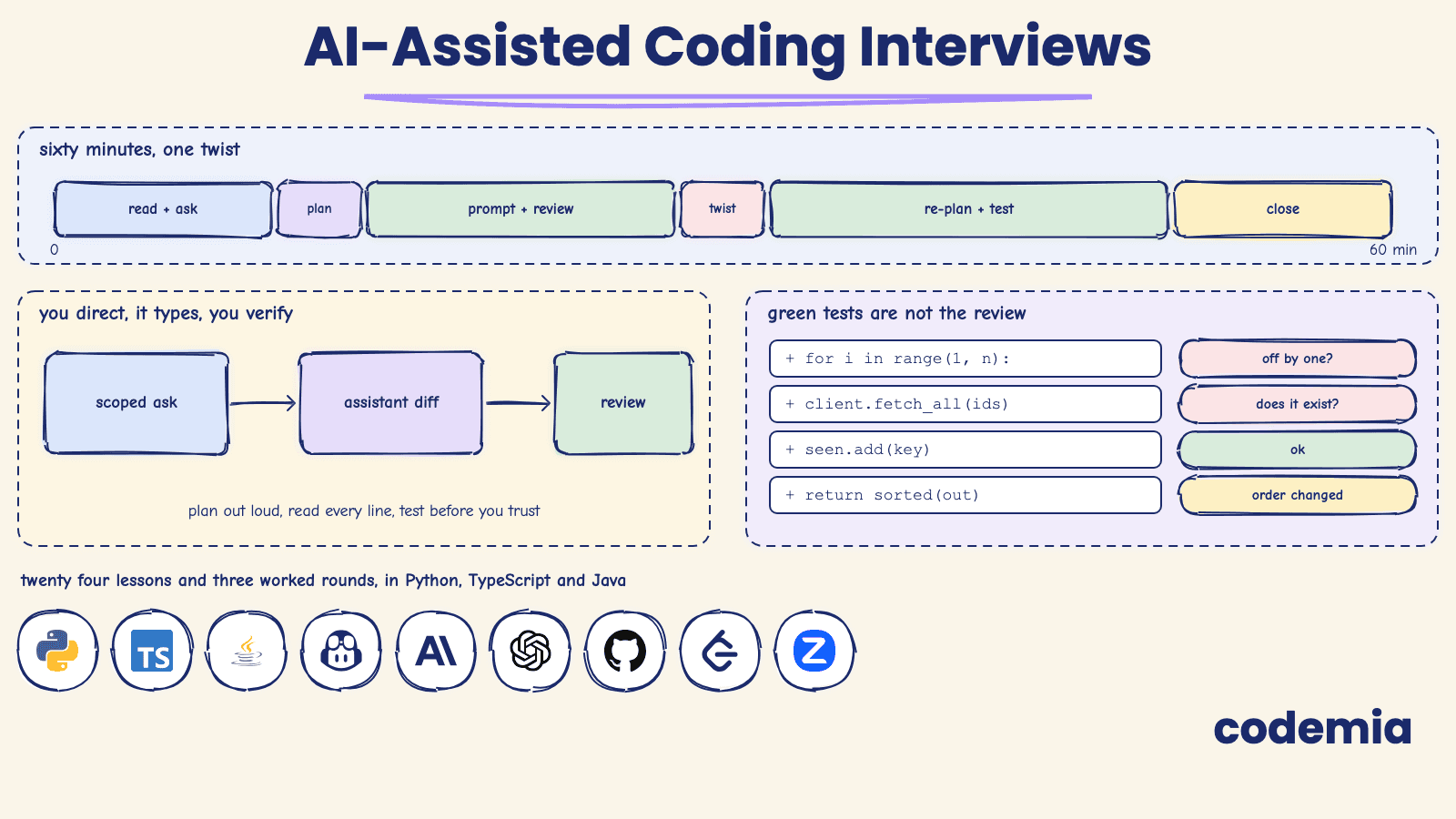
More companies now let candidates use an AI assistant in the coding round, and the round changes when they do. Typing speed and memorised algorithms matter less. What the interviewer scores is judgment: whether you understand the task before you ask for code, whether your prompts are precise, whether you catch the assistant's mistakes, whether you test before you trust green and how you respond when the requirements change halfway through.
The first section explains how these rounds work: what they measure, how different companies run them and the common ways strong engineers still fail them. Orientation and prompting follow: reading an unfamiliar codebase in ten minutes, saying the task back, scoped asks with the right context and when to type the code yourself.
The largest section is reviewing AI output. It builds a review routine for AI diffs, then works through the mistakes assistants make most often: off by one errors and missed edge cases, APIs that do not exist, silent behavior changes, code that passes the visible tests and fails the hidden ones, missed performance requirements and mutated shared state.
Testing, the twist, thinking out loud and time management cover the rest of the round: writing a failing test first, knowing when the visible tests deserve trust, re-planning and refactoring in small steps when the rules change, what to narrate and how to pace the sixty minutes.
The course closes with three full worked rounds, room booking, a leaderboard and a link shortener, each transcribed minute by minute with a debrief and a practice problem you solve yourself. Code throughout is in Python, TypeScript and Java.
Course Content
9 Chapters • 24 Lessons
Not what you were looking for? Have Basis Lab write you a course on it. It is a separate product from the same team, and the first course is free.
Enroll Now
Get instant access to all current and upcoming courses by subscribing.