Staff and Engineering Manager Interviews: Scope, Strategy, Influence, and Leading Teams
Interviewing above senior on both tracks. How staff and manager loops differ, how level is decided, the staff system design round, technical strategy, design reviews, migrations, incident leadership, scope and influence across teams, then the manager loop on people, performance, hiring, delivery, org design and partnering with product, and finally preparation, mock loops and negotiating level.
Course Overview
Interviews above senior are not harder versions of senior interviews. They measure something different: the size of the problem you can own without a plan, the judgment you show when every option is imperfect, and the leverage you create through other people. Strong senior engineers often prepare the way that worked last time and come away with a down level, because the loop was listening for scope and they talked about effort.
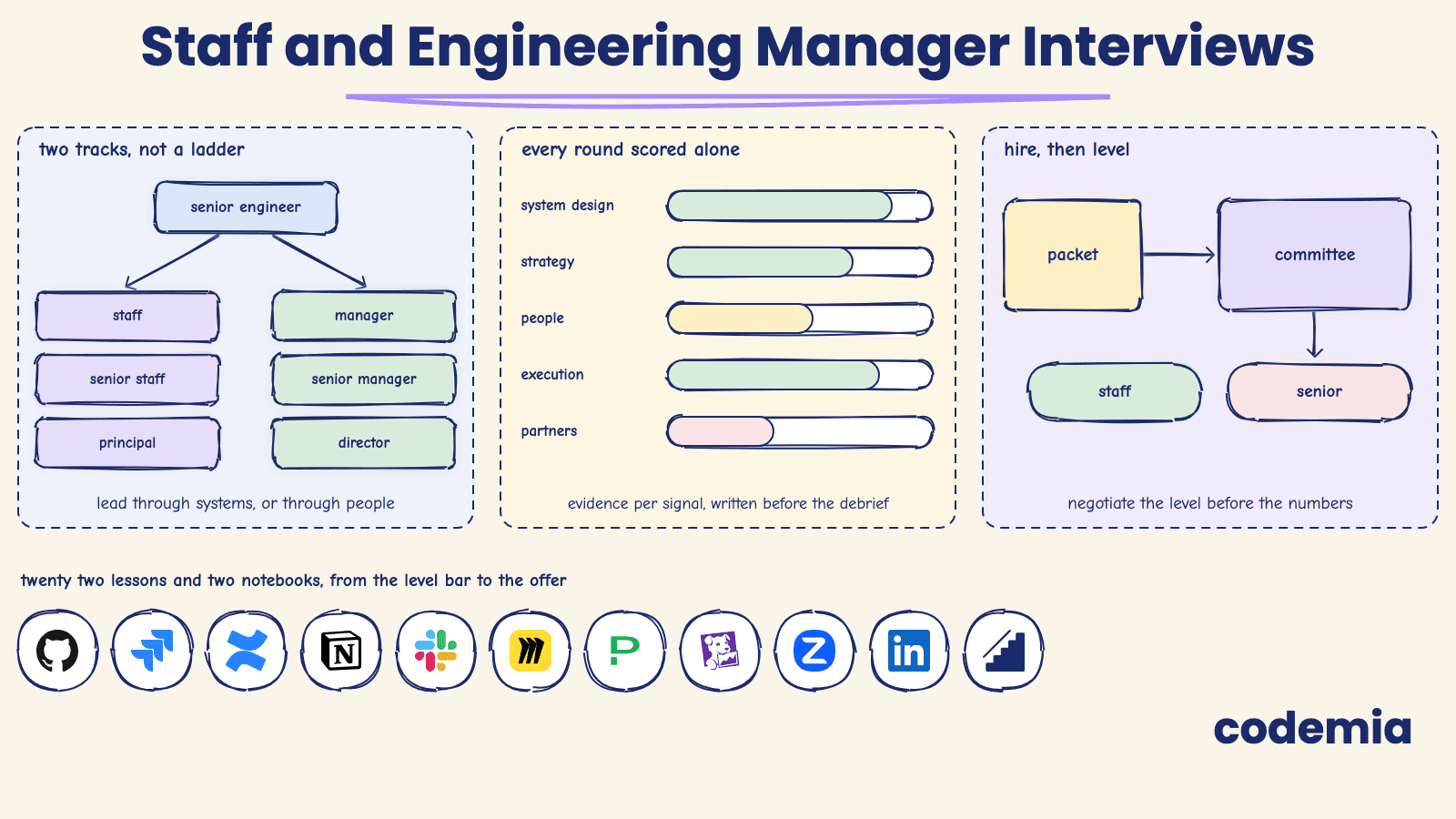
The first section explains the territory: how staff and engineering manager loops differ from senior loops and from each other, the common staff archetypes and level bars, what managers are hired for at each level, and how hiring committees actually decide level.
The second section covers the staff technical rounds: the staff system design round, technical strategy and vision, design reviews and written proposals, migrations and legacy modernization, and leading incidents and reliability work.
The third section is about leading across the organization: demonstrating staff scope and impact, building alignment and influence without authority, executing projects that span many teams, and raising the bar through sponsorship and standards.
The fourth section is the engineering manager loop: the people management round, performance management, hiring and team building, delivery and execution, org design and managing managers, and partnering with product and senior leadership.
The last section covers business judgment and product sense, a preparation plan with mock loops, and choosing the track and negotiating level. Notebooks simulate hiring calibration and Monte Carlo delivery forecasting, two topics managers are often asked to reason about with numbers.
Course Content
5 Chapters • 22 Lessons
Not what you were looking for? Have Basis Lab write you a course on it. It is a separate product from the same team, and the first course is free.
Enroll Now
Get instant access to all current and upcoming courses by subscribing.