Algorithm identify pairwise conflicts in a set of objects, given only there is a conflict in this list oracle
System Design practice on Codemia
Work through 120+ system design problems with detailed solutions, from rate limiters to multi-region storage.
Introduction
In computational problems across various domains, identifying conflicts in a set of objects is a common challenge. These conflicts may arise due to constraints, physical limitations, or logical inconsistencies. In this article, we delve into an algorithmic problem: detecting pairwise conflicts within a given set of objects using only a binary "oracle". This oracle merely indicates whether any conflict exists within a subset of objects without specifying the conflicting pair.
Problem Statement
Given a set of `n` objects, we are provided with an oracle that can accept a subset of these objects and return a binary answer: "Yes" if there is at least one pairwise conflict in the subset, or "No" if there is none. The goal is to systematically query the oracle to identify the specific pairs that are in conflict.
Algorithm
1. Problem Constraints and Assumptions
• Oracle Functionality: The oracle function `ConflictExists(S)` returns `True` if there is at least one conflict in subset `S` and `False` otherwise. • Number of Objects (`n`): The algorithm aims to minimize the number of oracle queries.
2. Strategy and Steps
The problem can be approached by strategically partitioning the set of objects and systematically narrowing down conflicts through a series of oracle queries. Here is a step-by-step outline:
a. Divide and Conquer Approach
- Initialization: Start with an unresolved set of objects `U` which initially contains all `n` objects.
- Recursive Division: • Divide the set `U` into two roughly equal subsets `A` and `B`. • Query the oracle for each subset. If `ConflictExists(A)` or `ConflictExists(B)` returns `True`, further investigate that subset.
- Locate the Conflict: • If a subset contains a conflict, repeat the division process recursively, further splitting the conflicting set until reduced to pairs. • When the set size reduces to 2, conclusively identify the conflicting pair.
b. Detecting All Pairwise Conflicts
To find all conflicting pairs:
• Iterative Search: Use the divide-and-conquer method iteratively until all pairs are tested. • Conflict Set: Maintain a list of all identified conflicting pairs.
3. Complexity Analysis
• Time Complexity: Each query approximately halves the search space. Therefore, in the worst case, roughly queries are needed to find the first conflict. To find all conflicts, the worst-case query count is , which can be reduced using optimizations such as leveraging past queries to avoid redundant checks.
• Space Complexity: Typically for maintaining the subsets and the list of detected conflicts.
Example
Consider a simple scenario with four objects: `1, 2, 3, 4`.
- Initial Query: Check the entire set. Suppose `ConflictExists([1, 2, 3, 4])` returns `True`.
- Divide: Split into `[1, 2]` and `[3, 4]`. Assume `ConflictExists([3, 4])` is `True`.
- Identify: Directly query the pair `[3, 4]`. If this returns `True`, `[3, 4]` is a conflicting pair.
This divide-and-conquer approach efficiently identifies conflicts with relatively fewer queries compared to a brute-force method checking all possible pairs.
Applications and Expansion
1. Use Cases
• Network Systems: Identifying interfering devices or conflicting network settings. • Project Management: Detecting conflicting task assignments. • Database Systems: Identifying conflicting transactions.
2. Enhancements
• Parallel Processing: Utilize parallel queries to the oracle to speed up the conflict detection process. • Query Optimization: By storing results of previous queries, refine future queries to eliminate redundant checks.
Summary Table
| Aspect | Details |
| Oracle Functionality | Boolean response on conflict existence |
| Methodology | Divide and conquer |
| Time Complexity | (for first conflict detection) |
| Space Complexity | |
| Applications | Networks, Project management, Databases Conflict resolution |
| Enhancements | Parallel queries, Query optimization |
This detailed exploration underscores the power of algorithmic techniques to address challenges involving conflict detection using a constrained oracle. By methodically applying divide-and-conquer principles, one can efficiently navigate and resolve such conflicts in a variety of real-world scenarios.
Related reading
- Algorithm or SQL to find where conditions for a set of columns which ensures result set has value in a particular column always 0
- Algorithm Printing the correct index for the character sequence
- Algorithm Question on File Search Indexing
- Algorithm to efficiently determine the nn element in a matrix
- algorithm issue - find the least common subset
- Algorithm Letters and envelopes pairing
- Algorithm to find if there is any i so that arrayi equals i
- Algorithms for building a peer to peer search engine with distributed database
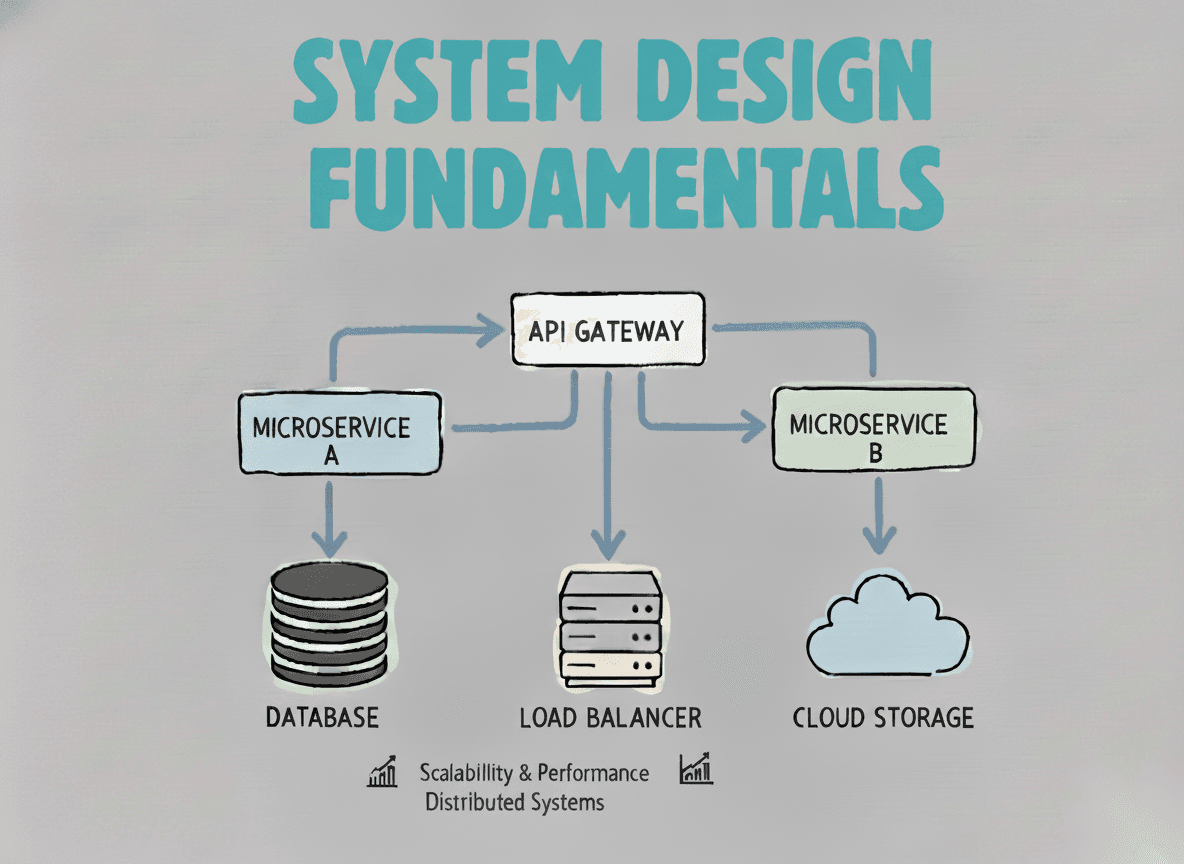
System Design Fundamentals
Build a strong foundation in designing scalable, reliable distributed systems.
View the courseSystem Design practice on Codemia
Work through 120+ system design problems with detailed solutions, from rate limiters to multi-region storage.