AWS products and services naming nomenclature starting with 'Amazon' vs 'AWS'
System Design practice on Codemia
Work through 120+ system design problems with detailed solutions, from rate limiters to multi-region storage.
The naming conventions for AWS products and services play a critical role in the branding and organizational framework for Amazon Web Services (AWS). Understanding why certain services are prefixed with 'Amazon' while others use 'AWS’ helps users better navigate this comprehensive suite of cloud solutions. This article delves into these naming conventions and provides clarity on how AWS strategically uses the 'Amazon' and 'AWS' prefixes.
Naming Conventions
Historical Context
Amazon Web Services launched in 2006 with 'Amazon' prefixed services. Over the years, AWS has expanded its portfolio dramatically, eventually leading to a diversification strategy in naming services to improve clarity and distinctiveness.
'Amazon' VS 'AWS' Prefixes
- 'Amazon' Prefix: This is used for foundational or core services that are intrinsic to AWS's reputation and functionality. These services often have stronger brand recognition and are older.
- 'AWS' Prefix: Launched later, this is generally used for newer services, specialized tools, or niche solutions that expand AWS's offer beyond the widely-used core services.
Examples and Technical Considerations
'Amazon' Named Services
- Amazon S3 (Simple Storage Service)
- A durable, scalable service for data storage.
- Highly recognized and often the first service new AWS users encounter.
- A key service for running applications on the cloud, offering resizable compute capacity.
- EC2 enables the provisioning of virtual servers, making it a cornerstone service.
- A newer service that allows users to execute functions without provisioning servers, popularizing the serverless paradigm.
- A fully managed ETL (Extract, Transform, Load) service well-suited for data integration.
- Created when AWS began to focus more on data wrangling and transformation tools.
- Brand Marking: The 'Amazon' prefix taps into the trust and credibility of the overall Amazon brand, particularly useful in establishing market trust in foundational services.
- Service Differentiation: Using 'AWS' as a prefix allows AWS to diversify its brand. This distinguishes newer services designed for complex or specific use cases.
- Strategic Relevance: Core services that form the backbone of AWS's cloud strategy generally carry the 'Amazon' prefix while specialized or supplementary services carry the 'AWS' prefix.
Related reading
- AWS python lambda functionNo module named requests
- AWS RDS for PostgreSQL cannot be connected after several hours
- AWS RDS instance upgrade down time
- AWS RDS instance upgrade down time
- AWS RDS PostgreSQL error remaining connection slots are reserved for non-replication superuser connections
- AWS RDS Provisioned IOPS really worth it?
- AWS RDS public access
- AWS RDS to PgAdmin Error saving properties Unable to connect to server timeout expired
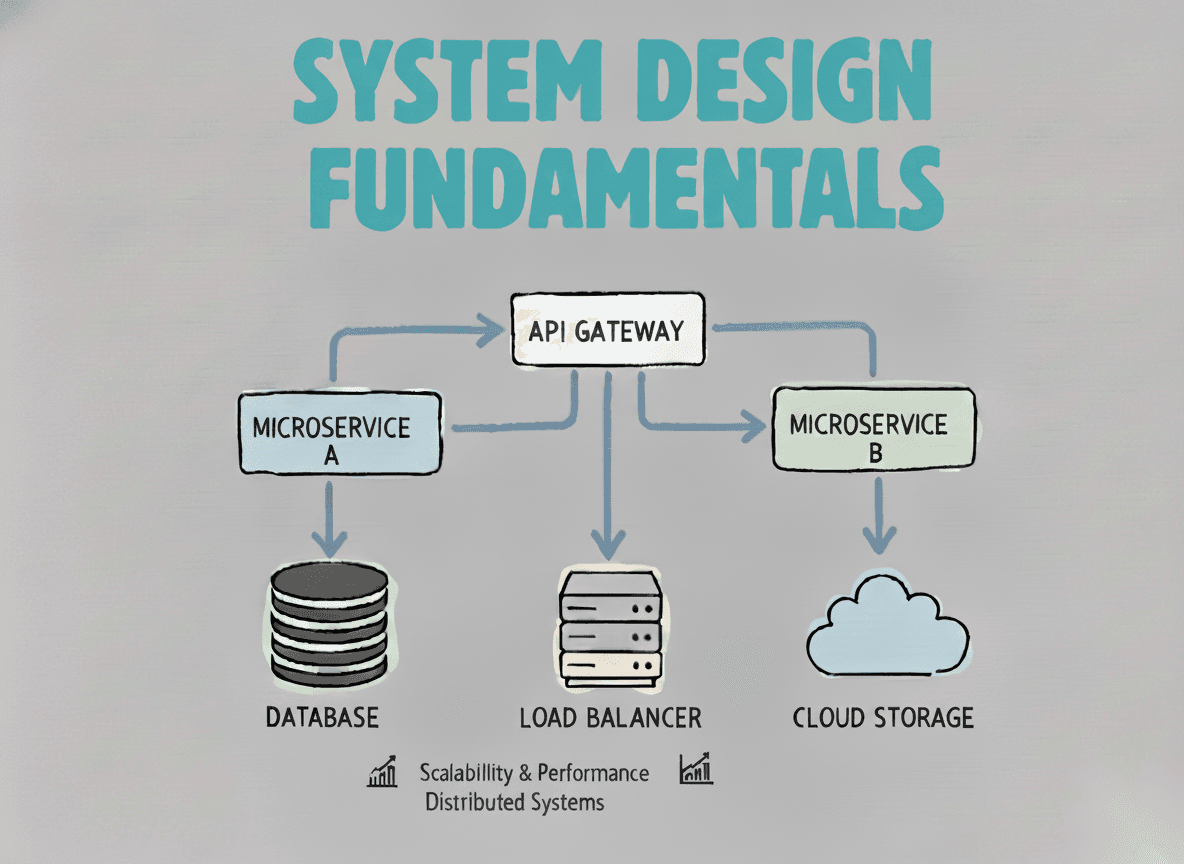
System Design Fundamentals
Build a strong foundation in designing scalable, reliable distributed systems.
View the courseSystem Design practice on Codemia
Work through 120+ system design problems with detailed solutions, from rate limiters to multi-region storage.