How does Erlang's support for transparent distribution of actors impact application design?
System Design practice on Codemia
Work through 120+ system design problems with detailed solutions, from rate limiters to multi-region storage.
Erlang's support for transparent distribution of actors significantly influences application design. By enabling Erlang-based systems to treat multiple networked nodes as a single system, it simplifies the scaling and distribution of applications. The language, originally crafted for fault-tolerant telecom systems, abstracts much of the complexity involved in distributed computing, which allows developers to concentrate more on business logic rather than on intricate networking details.
Transparent Distribution in Erlang
In Erlang, processes (or actors) can communicate with each other seamlessly across nodes without explicit handling of underlying network protocols. This process model, central to Erlang, decouples application design from specific hardware concerns, fostering robust and scalable system architectures.
Key Aspects of Erlang's Transparent Distribution
- Process Model:
Erlang is based on the Actor Model, where each process is isolated, having its own memory and states and communicates via message passing. The support for transparent distribution allows these processes to communicate effortlessly, irrespective of their physical location within a network. - Node Architecture:
Erlang nodes can refer to one another as simply as local processes would. Nodes in Erlang are identified using a combination ofnode()andprocess id (pid). From a developer's perspective, sending a message to a process on a different node is no different from sending it to a local one.
- Global and Distributed Registry:
Erlang offers global name registration, enabling processes to be identified by a name across distributed nodes. The global module allows names to be registered, resolved, and accessed uniformly across the system. - Fault Tolerance:
The built-in capabilities of Erlang for handling faults are extended to distributed systems. Supervisors can manage processes located on different nodes, providing resilience and fault recovery mechanisms at a network scale.
Technical Advantages
- Scalability: Scaling out where you add more machines rather than scaling up by replacing a machine with a more powerful model, is more seamless due to Erlang's distribution features. Nodes can easily be added to an existing system with minimal changes to code.
- Load Balancing and Redundancy: The distribution model supports load balancing through a strategy of spreading actors across multiple nodes and provides redundancy to ensure failure of a single node doesn’t lead to a complete system halt.
- Hot Swapping: Erlang's ability to change code while the system is running, known as hot-swapping, extends to distributed systems, allowing rolling updates without downtime.
Example Scenario
Consider a real-time messaging application. Erlang's transparent distribution allows each user session to run on a separate node without the users being aware of which server they're connected to. Messages can seamlessly move across nodes:
In the example above, send_message can be invoked with ToPid being any process from any node in the distributed system.
Challenges and Considerations
- Consistency: The ease of transparent distribution requires careful management of data consistency, especially when processes represent shared state across nodes.
- Network Latency: Although messages can be passed seamlessly, ensuring low-latency communication may require additional design considerations.
- Naming Conventions and Conflicts: As applications grow, avoiding naming conflicts in the global namespace becomes important.
Summary Table
Here's a summary of the key points regarding Erlang's distribution features:
| Feature | Description |
| Transparent Process | Distributes actors across nodes seamlessly. |
| Global Naming | Allows names to be identified and resolved globally across nodes. Simplifies access. |
| Fault Tolerance | Inherent fault recovery mechanisms handle distributed nodes. |
| Scalability | Easily scales horizontally by adding more nodes. |
| Load Balancing | Supports distribution of load across multiple systems. |
| Hot Swapping | Facilitates changes to code during runtime, even in a distributed setup. |
| Communication | Employs message passing without developer needing to handle the underlying network. |
Conclusion
Erlang's transparent distribution of actors enhances application design by providing robust and intuitive mechanisms for developing distributed systems. Through features like seamless message passing, fault tolerance, and dynamic scalability, Erlang simplifies many of the complexities associated with designing networked applications. As applications grow in size and complexity, Erlang's inherent capabilities provide a compelling solution for building resilient, scalable, and maintainable distributed systems.
Related reading
- How does etcd propagate writes to non-leader members?
- How does fault tolerance works in a distributed system?
- How does Google file system deal with write failures at replicas?
- How does gRPC connection work on kubernetes service ClusterIP
- How does High Replication Datastore implement consistent reads
- How does HLC hybrid logical clock solve Linearizability and Serializability in distributed transaction?
- How does immutable data make eventual consistency trivial?
- How does kafka ack batch AsyncProducer
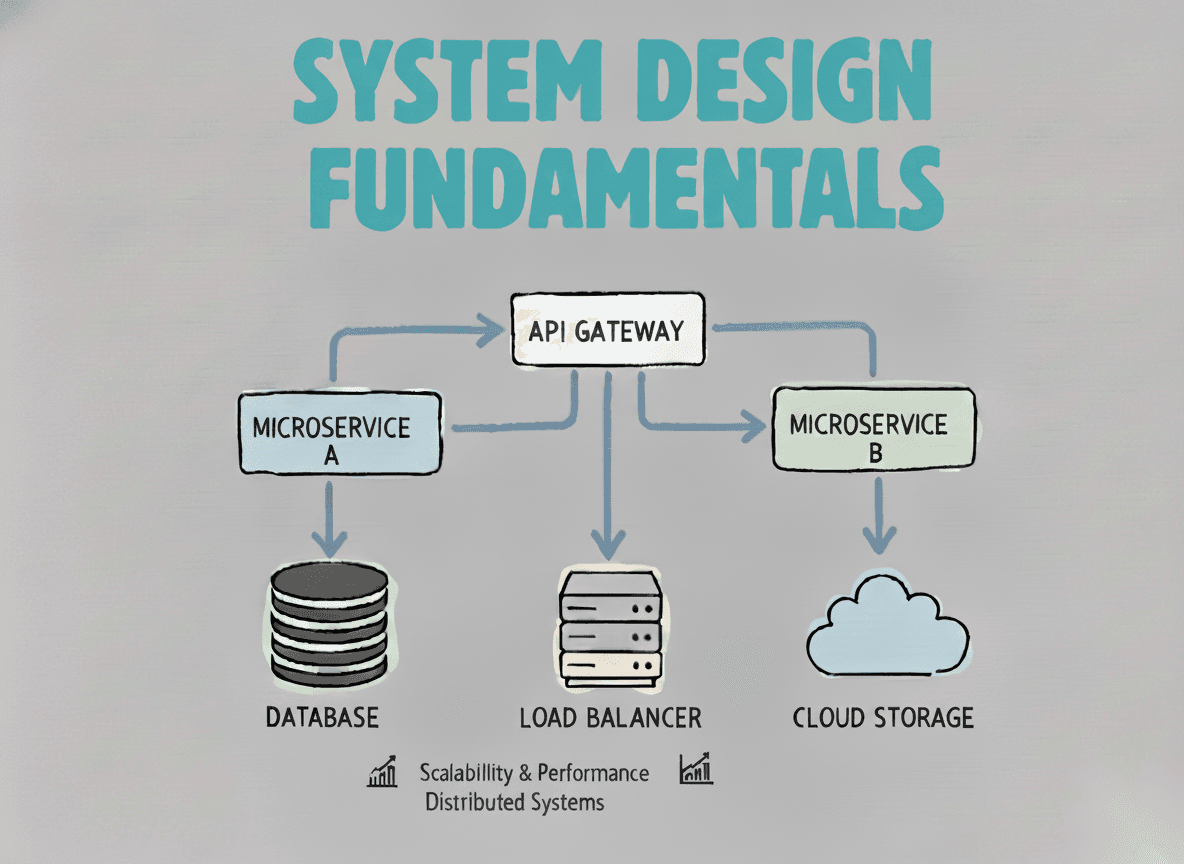
System Design Fundamentals
Build a strong foundation in designing scalable, reliable distributed systems.
View the courseTrack what you have practised
A free account saves your progress, solutions and study plan across every problem on Codemia.
System Design practice on Codemia
Work through 120+ system design problems with detailed solutions, from rate limiters to multi-region storage.