How to handle a situation of feature scaling in machine learning model deployment when you have only one testing instance?
ML System Design practice on Codemia
Design recommenders, ranking systems and training pipelines the way ML interviews actually ask for them, with worked solutions.
Feature scaling is a crucial preprocessing step in machine learning that ensures that each feature contributes equally to the distance computations, which impacts the performance of models like k-nearest neighbors, support vector machines, and gradient descent-based algorithms. However, when it comes to deploying a machine learning model and you have only one testing instance, handling feature scaling requires careful consideration. This article describes how to manage feature scaling in such a scenario by detailing processes, technical insights, and providing illustrative examples.
Understanding Feature Scaling
Before diving into handling feature scaling during deployment, let's review what feature scaling is and why it's important.
- Definition: Feature scaling involves standardizing the range of independent variables or features of data. In simpler terms, it's about transforming the data so that it fits within a particular scale, like 0 to 1.
- Types of Feature Scaling: • Normalization (Min-Max Scaling): Transforms features by scaling each feature to a given range, often between 0 and 1. • Standardization (Z-score Normalization): Transforms the data by subtracting the mean and scaling it to unit variance.
These techniques are critical to ensure that a model generalizes well, instead of being biased towards features with larger magnitudes.
Deployment with a Single Testing Instance
When deploying a model, you often need to preprocess features similarly to how you handled them during training. With only a single testing instance available, this process can be challenging. Here's a step-by-step approach:
1. Record Scaling `Parameters` from the Training Data
When training the model, you should save the parameters of the scaling function:
• For Normalization: Save the minimum (`X_{\text{min}}`) and maximum (`X_{\text{max}}`) values for each feature. • For Standardization: Save the mean (`\mu`) and standard deviation (`\sigma`) for each feature.
This ensures consistency in feature scaling between the training and deployment stages.
2. Apply the Pre-computed Scaling to the Testing Instance
Use the saved parameters to transform the testing instance:
• Normalization:
• Standardization:
This step is crucial to ensure the alignment of feature scaling across datasets.
3. Constraints and Considerations
• Absence of Features: Handle missing features by having a strategy, such as using a default value or median imputation. • Feature Drift: Over time, real-world data may drift from the distribution used during model training. Continuously monitor and update the scaling parameters as needed.
4. Testing and Validation
• Consistency: Ensure the output aligns with expected results by validating using known data points. • Version Control: Always version your preprocessing steps so that if the model behaves unexpectedly, you can trace back through the exact transformations applied.
Example
Consider that during training, a feature 'age' had a minimum of 18 and a maximum of 90. You receive a testing instance where 'age' is 35. Using normalization:
Using these pre-computed parameters ensures the model treats this instance properly relative to its training data.
Summary Table
| Aspect | Description |
| Scaling Technique | Either Normalization or Standardization is used. |
Key Parameters (Normalization) | , for each feature Save them during training for use during deployment. |
Key Parameters (Standardization) | , for each feature Save during training and reuse. |
| Deployment Step | Apply saved parameters to transform the single test instance, ensuring consistency. |
| Drift Monitoring | Keep an eye on potential drift over time Update scaling parameters as needed based on new data. |
| Validation | Test the preprocessed instance against expected outcomes Ensure feature scaling consistency. |
Additional Considerations
• Scaling Libraries: Popular machine learning libraries such as Scikit-Learn provide efficient ways to save and load scalers using methods like `fit`, `transform`, and `inverse_transform`. • Automated Pipelines: Incorporate feature scaling in automatic data pipelines, ensuring consistency and scalability in real-time applications.
By meticulously logging the scaling parameters and ensuring their consistent application, you can manage feature scaling even in situations with only one testing instance, thereby maintaining the integrity and reliability of your machine learning models.
Related reading
- How to handle categorical variables in sklearn GradientBoostingClassifier?
- How to handle date variable in machine learning data pre-processing
- How to handle large amouts of data in tensorflow?
- How to handle large amouts of data in tensorflow?
- How to handle missing NaNs for machine learning in python
- How to handle Shift in Forecasted value
- How to handle data migrations in distributed microservice databases
- How to handle database migrations with Kubernetes and Skaffold
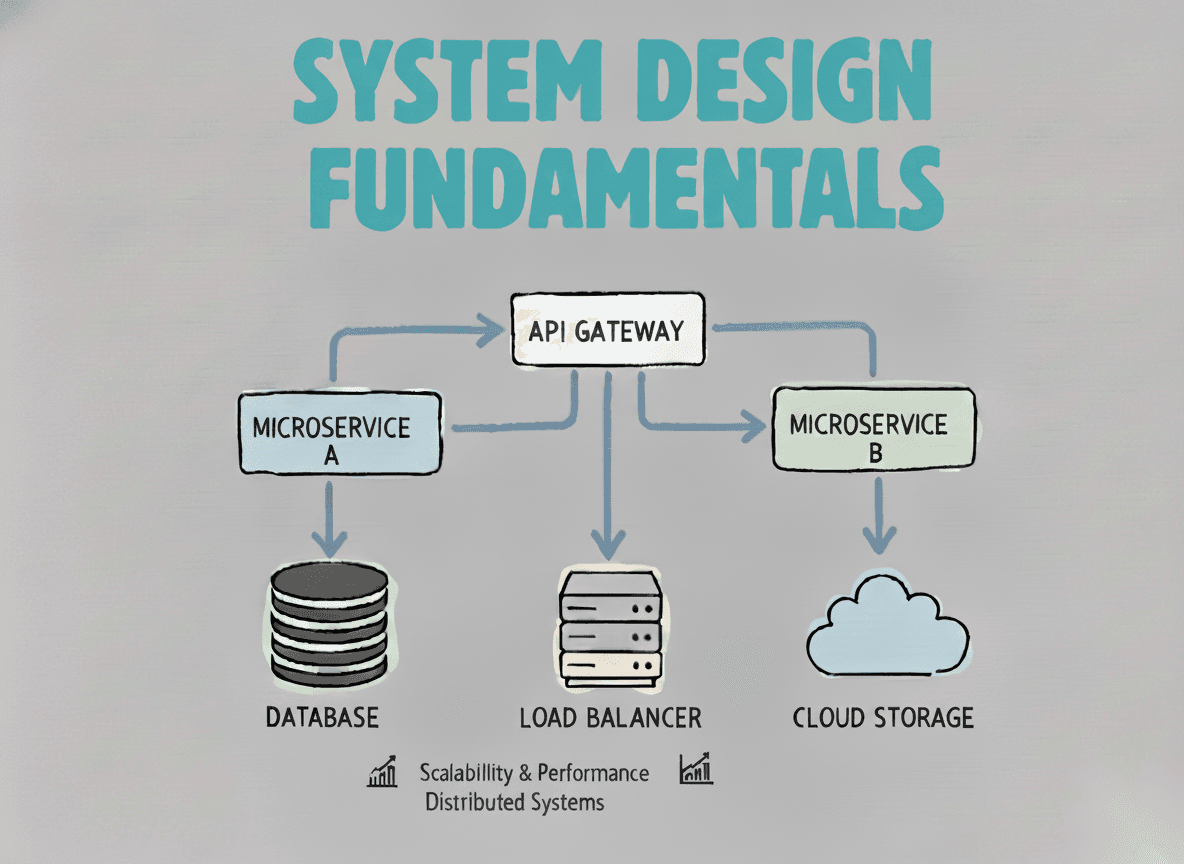
System Design Fundamentals
Build a strong foundation in designing scalable, reliable distributed systems.
View the courseTrack what you have practised
A free account saves your progress, solutions and study plan across every problem on Codemia.
ML System Design practice on Codemia
Design recommenders, ranking systems and training pipelines the way ML interviews actually ask for them, with worked solutions.