How to structure Machine Learning projects using Object Oriented programming in Python?
ML System Design practice on Codemia
Design recommenders, ranking systems and training pipelines the way ML interviews actually ask for them, with worked solutions.
Machine Learning (ML) projects can often be complex, involving various interrelated components such as data handling, model training, evaluation, and deployment. Structuring these projects using Object-Oriented Programming (OOP) can greatly enhance modularity, readability, and maintainability. This article explores how to effectively use OOP to structure ML projects in Python.
Fundamentals of OOP in Python
Before delving into the application of OOP in ML projects, it is essential to understand some fundamental OOP principles:
- Encapsulation: This principle involves bundling data (attributes) and methods (functions) that operate on the data into a single unit or class. Encapsulation helps in reducing complexity and increasing reusability.
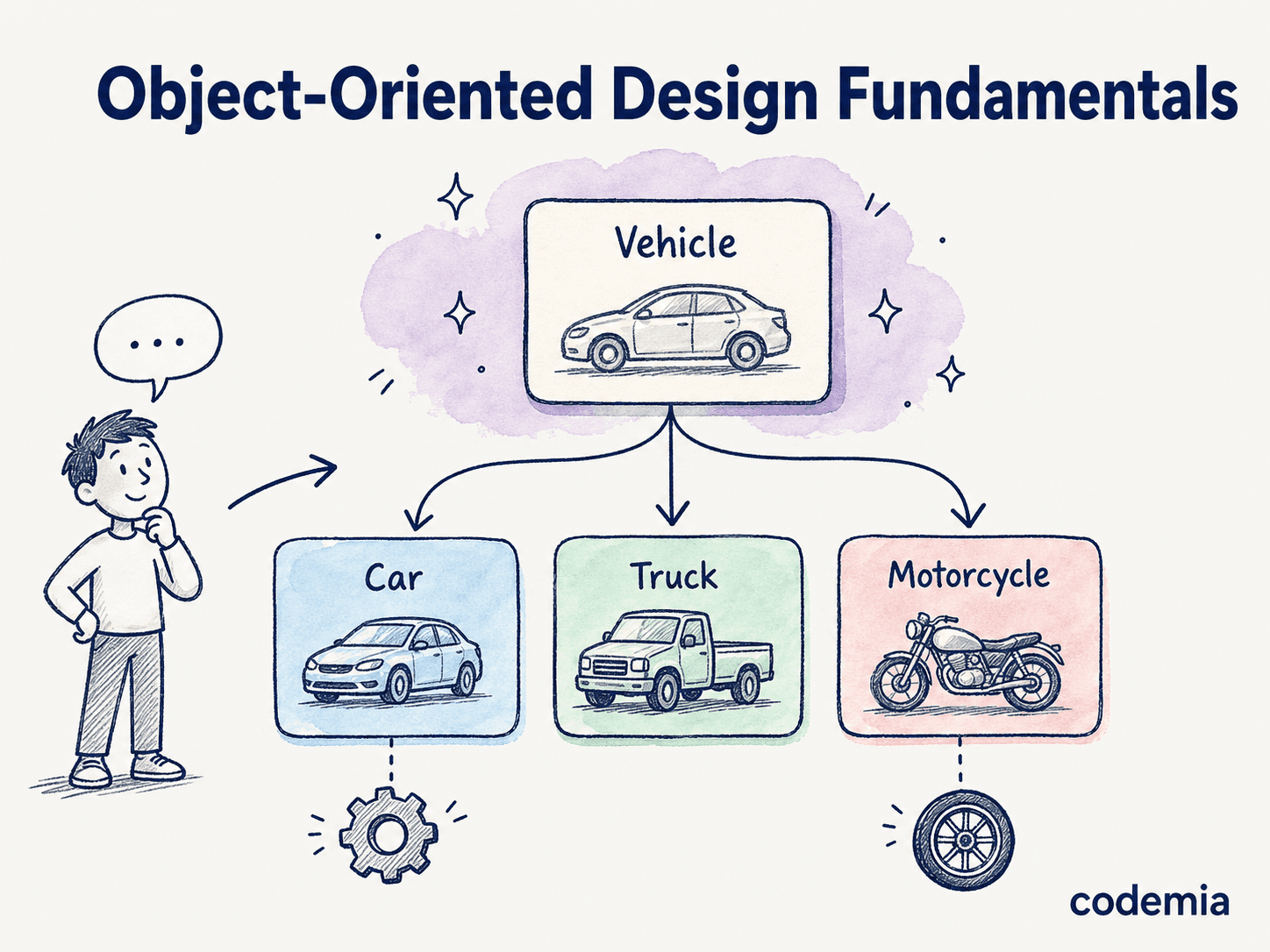
- Inheritance: Inheritance enables new classes (child classes) to inherit properties and behaviors from existing classes (parent classes), promoting code reuse.
- Polymorphism: Polymorphism allows objects to be treated as instances of their parent class rather than their actual class, enabling the same interface to be used for different types of objects.
- Abstraction: Abstraction involves hiding complex implementation details and exposing only the necessary parts, making the code cleaner and easier to manage.
Structuring an ML Project with OOP
1. Project Initialization
The initial step in structuring an ML project is setting up the file architecture. Organize the project directories to include folders for data, scripts, models, and outputs. This distinct separation will aid in maintaining order throughout the project lifecycle.
2. Data Handling Class
Create a class dedicated to data handling. This class should be responsible for loading data, preprocessing, and splitting datasets.
- Modularity and Reusability: By using OOP, each component of the ML pipeline is modular and reusable. For instance, the `Model` class can be easily extended to include different algorithms using inheritance.
- Abstraction and Encapsulation: The pipeline class abstracts the entire workflow, providing a simple interface to execute complex operations.
- Scalability: This structure allows new functionalities or algorithms to be added with minimal changes to existing code, thereby supporting scalability.
- Documentation and Testing: With a well-defined structure, it's easier to document each class and function. Furthermore, unit testing can be effectively utilized to test individual components separately.
Related reading
- How to suppress all autograph warnings from Tensorflow?
- How to suppress specific warning in Tensorflow Python
- How to Suppress Tensorflow warning displayed in result
- How to tell if tensorflow is using gpu acceleration from inside python shell?
- How to use dependency injection with an attribute?
- How to use generic protocol as a variable type
- How to subscribe to a list of multiple kafka wildcard patterns using kafka-python?
- How to sum all the values in a dictionary?
System design interview problems on this topic
- Design an E-commerce Recommendation System: solution and walkthrough
- Design an LLM Inference Service: solution and walkthrough
- Design a GPU Cluster Scheduler for ML Training: solution and walkthrough
- Design ChatGPT: solution and walkthrough
OOD Fundamentals
Master object-oriented design from first principles, SOLID, design patterns, and classic interview problems with hands-on coding.
View the courseML System Design practice on Codemia
Design recommenders, ranking systems and training pipelines the way ML interviews actually ask for them, with worked solutions.