How to use Dataset API to read TFRecords file of lists of variant length?
ML System Design practice on Codemia
Design recommenders, ranking systems and training pipelines the way ML interviews actually ask for them, with worked solutions.
Introduction
Variable-length features are common in TensorFlow pipelines. A text example may have a different token count than the next one, and one recommendation event may contain three item IDs while another contains twenty. The usual way to store this in TFRecords is with list features, then parse them with tf.io.VarLenFeature and batch them with padding or ragged tensors.
Write and Parse Variable-Length Lists
The TFRecord format stores each example independently, so variable-length lists fit naturally. Here is a complete example that writes two examples with different list sizes and reads them back through the Dataset API.
The key detail is VarLenFeature. That tells TensorFlow the list length may differ between records. The parser returns a SparseTensor, because each example may have a different number of values.
Dense, Sparse, or Ragged
After parsing, you have three main options:
- Keep the feature sparse if the downstream model accepts sparse inputs.
- Convert it to a dense tensor with
tf.sparse.to_dense(). - Convert it to a ragged tensor if variable-length structure should be preserved more explicitly.
Dense conversion is simple, but batching dense tensors requires padding. That is usually fine for sequence models.
The padded result for the sample data would be a rectangular batch where shorter lists are filled with zeros. That makes it easy to feed the data into embedding layers, recurrent models, or custom training loops.
If zeros are meaningful values in your domain, choose another padding token and make sure the model knows to mask it or ignore it.
When to Use SequenceExample
Some pipelines use tf.train.SequenceExample for sequential data. That can be useful when you have context features plus per-step feature lists. But if your record simply contains one variable-length list field, a normal Example plus VarLenFeature is often easier to read and maintain.
The important design decision is not the container type alone. It is whether the downstream parser and model can preserve the meaning of sequence length, order, and padding.
For performance, keep the input pipeline streaming and avoid loading the whole file at once:
That pattern scales much better for real training jobs than manually reading records into Python lists.
Common Pitfalls
The most common mistake is using tf.io.FixedLenFeature for data that is not actually fixed length. That either fails during parsing or forces you to pad at write time, which makes the format less flexible.
Another mistake is forgetting that VarLenFeature produces a sparse tensor. Code that expects a dense tensor will break until you explicitly convert it or adapt the model.
Batching is another frequent source of confusion. Variable-length examples cannot form a normal dense batch without padding. Use padded_batch() or keep the data ragged if the model supports it.
Finally, be deliberate about padding values. A bad padding token can leak into training and hurt accuracy if the model treats padded positions like real data.
Summary
- Store variable-length lists in TFRecords as list features inside each
Example. - Parse them with
tf.io.VarLenFeature, notFixedLenFeature. - '
VarLenFeaturereturns aSparseTensor, which you can keep sparse or convert to dense.' - Use
padded_batch()when batching sequences of different lengths. - Choose padding values and masking behavior carefully so the model does not learn from padding.
Related reading
- How to use dataset.shard in tensorflow?
- How to use evaluation_loop with train_loop in tf-slim
- How to use existing weights in ndarray format for tf.layers.dense in python?
- How to use feed_dict in Tensorflow multiple GPU case
- How to use datasets.fetch_mldata in sklearn?
- How to use F-score as error function to train neural networks?
- How to use Firebase with Spring boot REST Application?
- How to use Google API Client Library for JavaScript gapi with async/await?
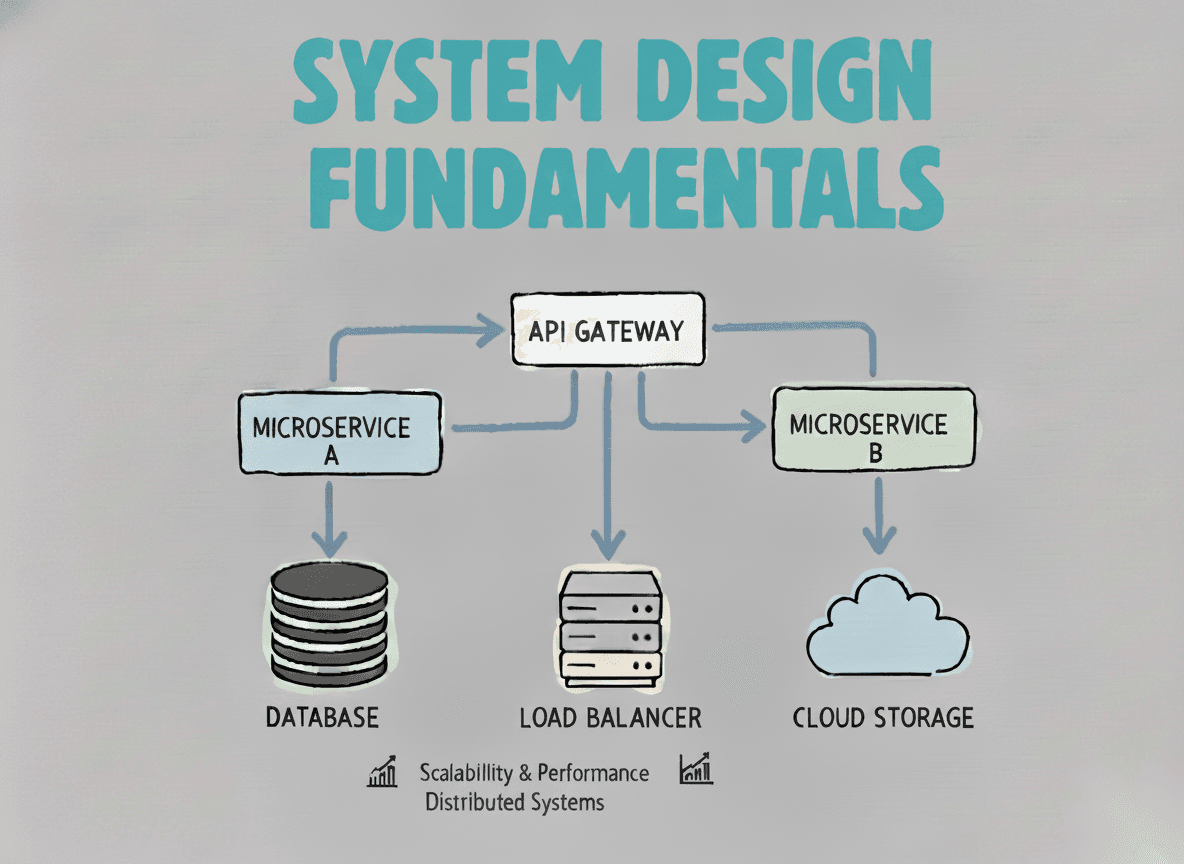
System Design Fundamentals
Build a strong foundation in designing scalable, reliable distributed systems.
View the courseTrack what you have practised
A free account saves your progress, solutions and study plan across every problem on Codemia.
ML System Design practice on Codemia
Design recommenders, ranking systems and training pipelines the way ML interviews actually ask for them, with worked solutions.