STL way to access more elements at the same time in a loop over a container
System Design practice on Codemia
Work through 120+ system design problems with detailed solutions, from rate limiters to multi-region storage.
Introduction
Many C++ tasks need more than one element per iteration, such as adjacent comparisons, sliding windows, or combining values from two containers. The STL gives several idiomatic ways to do this without brittle index math everywhere. The right technique depends on container type, iterator category, and whether you need mutation or read-only traversal.
Pairwise Access with Iterators
For adjacent element logic, iterator-based traversal is clean and works for many container types.
This avoids explicit integer bounds and communicates pairwise intent clearly.
Sliding Window Access with Indices
When you need fixed-size windows such as three items at a time, index loops can be pragmatic on random-access containers like std::vector.
This style is direct and often fastest for contiguous memory.
Traverse Two Containers Together
A common pattern is combining corresponding elements from two vectors. std::transform expresses this safely and keeps the intent declarative.
This makes it obvious that each output element uses one element from each source container.
Choose Technique by Container Category
Not all containers support random access efficiently. std::list supports bidirectional iteration but not fast index jumps, so prefer iterator-based patterns there. std::vector and std::deque support random access, so index windows are fine.
If you target modern compilers with ranges support, range adaptors can make these patterns even more expressive. Still, portability matters, so use the simplest approach your toolchain supports reliably.
Reduce Bugs with Boundary-Safe Patterns
Most multi-element loop bugs come from boundary errors. A few rules help:
- if reading
i + k, ensure loop condition enforces valid range - for iterator pairwise loops, use
std::next(it) != endas stop condition - validate equal sizes before parallel container traversal
These checks make loops easier to review and safer during future edits.
Readability Versus Micro-Optimization
Manual index loops can be slightly faster in tight hotspots, but readability often matters more unless profiling proves a bottleneck. STL algorithms communicate intent and reduce off-by-one risk. In performance-sensitive sections, benchmark both versions with representative data and compiler flags.
Also consider memory access pattern. For large datasets, contiguous containers and predictable stride often have more impact than small loop-style differences.
Common Pitfalls
A frequent error is using index-based access on non-random-access containers, which either fails to compile or performs poorly through repeated advancement. Another issue is forgetting end conditions when reading neighbors, which causes undefined behavior from out-of-range reads. Developers also merge two vectors without checking sizes, then silently lose data or crash. Finally, overusing clever iterator tricks can reduce maintainability. Prefer straightforward loops that teammates can verify quickly.
Summary
- Use iterator pairwise loops for adjacent element access across container types.
- Use index windows when random access is available and intent is simple.
- Use
std::transformfor element-wise operations across two containers. - Guard boundaries and size assumptions explicitly.
- Optimize loop style only after profiling confirms it matters.
Related reading
- Stop and remove all docker containers
- Stopping Docker containers by image name - Ubuntu
- String operation on env variables on Kubernetes
- sudo docker-machine command not found
- Store the largest 5000 numbers from a stream of numbers
- Storing pairwise sums in linear space
- Stop Wasting Money on CORS Preflight Requests: A Detailed Guide to API Cost Optimization
- Stop Parallel.ForEachAsync
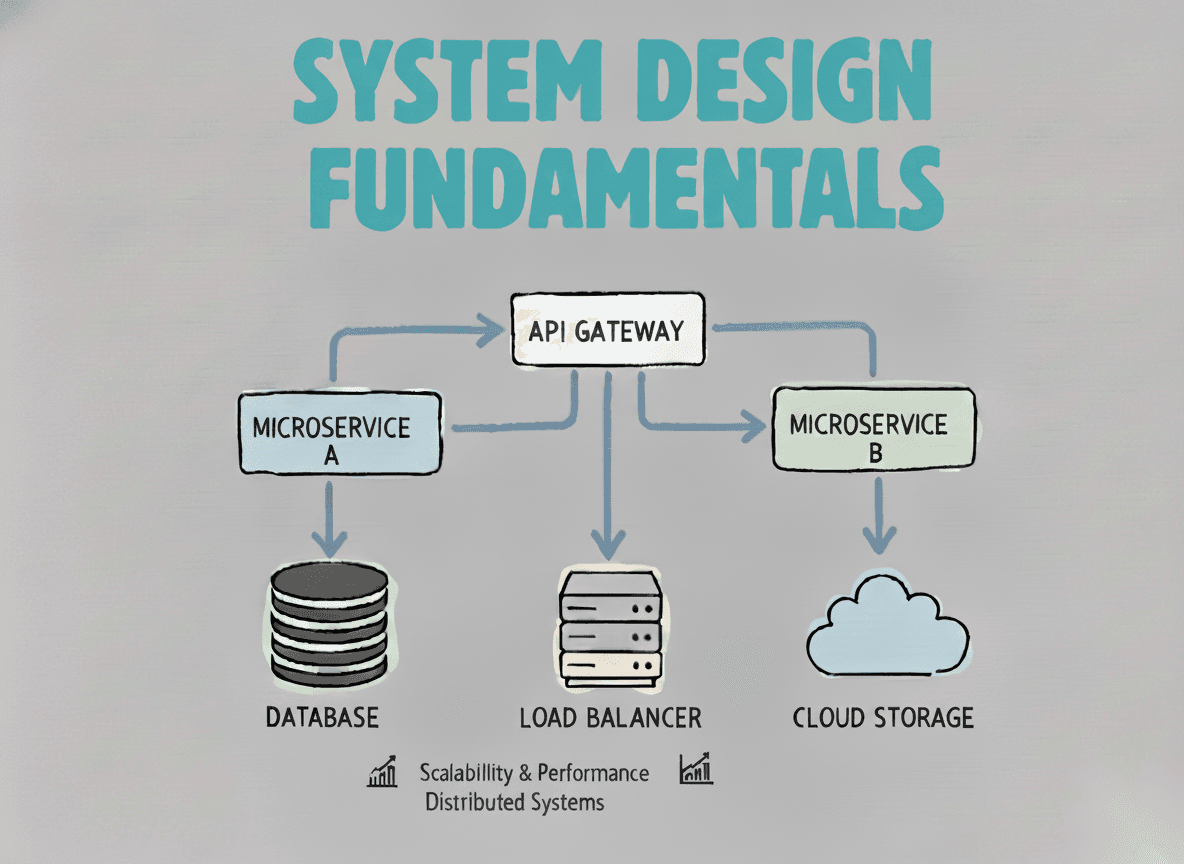
System Design Fundamentals
Build a strong foundation in designing scalable, reliable distributed systems.
View the courseTrack what you have practised
A free account saves your progress, solutions and study plan across every problem on Codemia.
System Design practice on Codemia
Work through 120+ system design problems with detailed solutions, from rate limiters to multi-region storage.