What is a good choice of database for a small .NET application?
System Design practice on Codemia
Work through 120+ system design problems with detailed solutions, from rate limiters to multi-region storage.
Choosing the right database for a small .NET application is crucial for ensuring performance efficiency, scalability, and simplicity of development and maintenance. This article will explore popular database options available for small .NET applications, offering technical explanations and examples relevant to the decision-making process.
1. Introduction
.NET applications, whether built using traditional .NET Framework or the modern .NET Core, often require a reliable database to persist and manage data. The decision of which database to use often depends on a variety of factors, including the complexity of data relationships, the expected load, ease of integration with .NET, licensing costs, and scalability needs.
2. Popular Database Choices
2.1 Microsoft SQL Server Express
Technical Explanation
Microsoft SQL Server Express is a lightweight, free version of Microsoft SQL Server, suitable for small user-scale applications. It provides essential database functionality while maintaining compatibility with the full SQL Server product suite. It's a great option for small-scale applications due to its deep integration with the .NET ecosystem.
Use Case Example
For a small inventory management application with simple transactional needs and modest growth expectations, SQL Server Express offers sufficient functionality. It supports stored procedures, triggers, and .NET-specific drivers, making integration seamless.
2.2 SQLite
Technical Explanation
SQLite is a serverless, self-contained, and zero-configuration SQL database engine. It stores data in a single file, which simplifies deployment and reduces overhead, making it ideal for small applications where client-side storage suffices.
Use Case Example
An application, such as a lightweight desktop time-tracking tool, can effectively utilize SQLite. With its single-file storage and ability to handle moderate query loads, SQLite offers efficiency without requiring database server management.
2.3 MySQL and MariaDB
Technical Explanation
Both MySQL and MariaDB are open-source relational databases known for their reliability and performance. They support standard SQL and provide robust transaction support, making them suitable for many web and desktop applications.
Use Case Example
A small blog website or e-commerce site could employ MySQL or MariaDB. Their broad feature sets, community support, and existing .NET connectors facilitate integration and offer straightforward scaling options.
2.4 PostgreSQL
Technical Explanation
PostgreSQL is an advanced, open-source relational database that emphasizes extensibility and SQL compliance. It supports complex queries, full-text search, and custom data types, making it suitable for applications requiring advanced data handling.
Use Case Example
For a small business analytics platform requiring complex data queries and integrity, PostgreSQL provides advanced features and spatial database extensions, enhancing application capabilities without additional costs.
3. Comparison Table
Here's a summary comparison of key database features relevant to small .NET applications:
| Database | Cost | Setup Complexity | Performance | Scalability | Feature Set | Best Fit |
| SQL Server Express | Free | Moderate | High | Limited | Strong .NET integration | Desktop or local server apps |
| SQLite | Free | Very Low | Moderate | Limited | Serverless, single-file | Local storage/single-user apps |
| MySQL / MariaDB | Free | Moderate | Moderate | Moderate to High | Wide language support | Web applications |
| PostgreSQL | Free | Moderate | High | Moderate to High | Extensibility, strong SQL compliance | Advanced query requirements |
4. Additional Considerations
When selecting a database, consider the following additional aspects:
- Data Volume: Assess the anticipated data and transaction volume; this influences the database's capacity and performance requirements.
- Development Time: Integration with .NET technologies like Entity Framework and ADO.NET can impact development time and complexity.
- Community and Support: Evaluate the community support, documentation, and available resources for each database.
- Backup and Recovery: Consider built-in features for data backup and disaster recovery mechanisms.
- Security: Database security features, such as user authentication and encryption, may be essential depending on application type and data sensitivity.
5. Conclusion
Selecting the right database for a small .NET application involves thorough analysis of the application's requirements and constraints. By understanding the capabilities of each option and aligning them with the application's needs, developers can make an informed choice that promotes efficient development and reliable application performance. For small-scale applications, factors such as ease of integration, cost, and maintenance overhead are often prioritized, with SQL Server Express, SQLite, MySQL, and PostgreSQL each offering distinct advantages based on specific use cases.
Related reading
- What is a process for recovering a failed master from a slave with PostgreSQL?
- What is being distributed in a distributed database?
- What is cardinality in MySQL?
- What is considered a write against the entity group limit in Google Cloud Datastore
- What is a method group in C?
- What is a .NET application domain?
- What is desirable number of connections in a pool?
- What is InnoDB and MyISAM in MySQL?
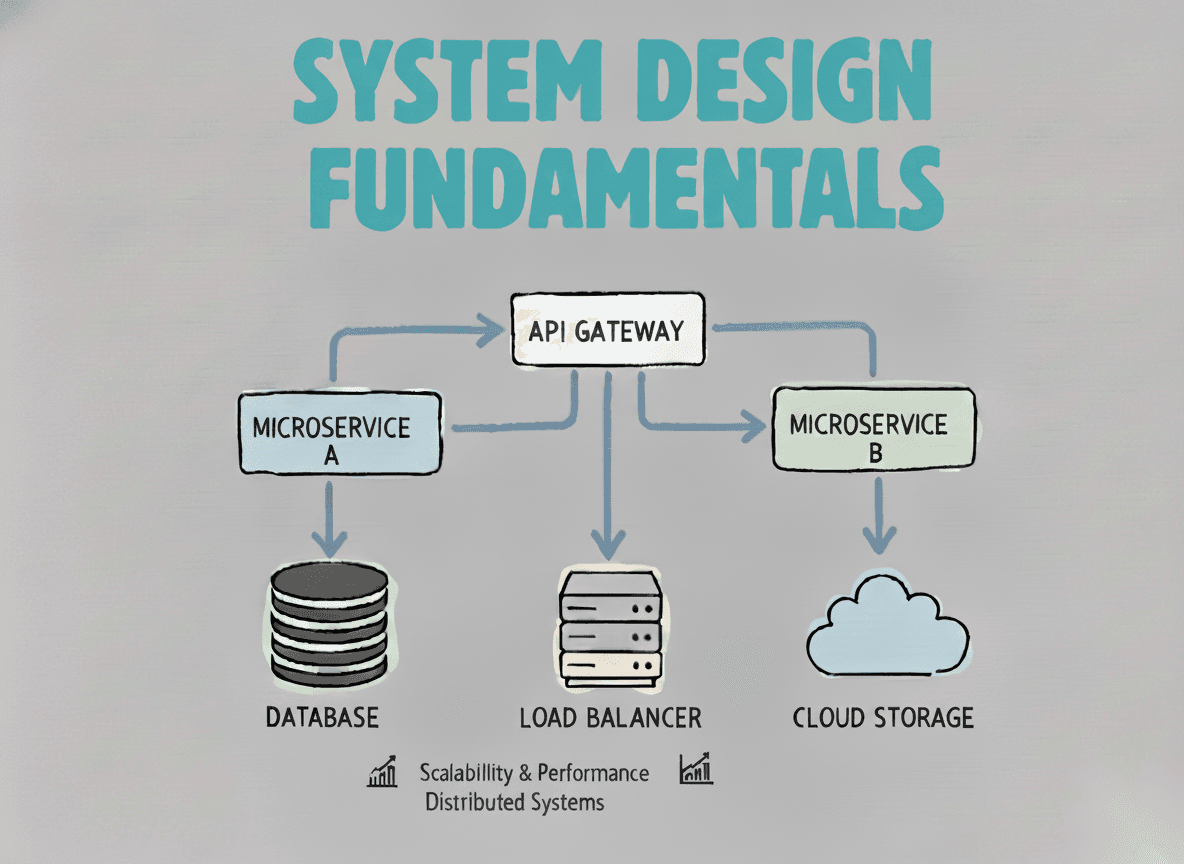
System Design Fundamentals
Build a strong foundation in designing scalable, reliable distributed systems.
View the courseSystem Design practice on Codemia
Work through 120+ system design problems with detailed solutions, from rate limiters to multi-region storage.