What is the proper use of Tensorflow dataset prefetch and cache options?
ML System Design practice on Codemia
Design recommenders, ranking systems and training pipelines the way ML interviews actually ask for them, with worked solutions.
TensorFlow, an open-source machine learning library, provides a suite of tools that assist in the seamless deployment and training of machine learning models. Among these are the dataset prefetch and cache options, which are integral to managing data input pipelines efficiently. These functionalities can substantially enhance the performance of the model training process, especially when dealing with large datasets. Here, we will explore the proper use of these two options, providing technical insights and practical examples.
Dataset Prefetching
Prefetching is a technique to overlap the preprocessing of data with model execution. The TensorFlow tf.data API includes a prefetch transformation that potentially overcomes input bottlenecks through asynchronous data transfers and parallelization.
Why Use Prefetch?
When training models, it often happens that the computation is stalled, waiting for data to arrive. Prefetching allows the data input to be decoupled from the model execution, meaning that the CPU can prepare the next batch of data while the GPU (or another accelerator) is training on the current batch. This operation can significantly increase the throughput of the training process.
How to Implement Prefetch?
To use prefetching in TensorFlow:
- Import TensorFlow and your dataset.
- Define your data pipeline.
- Add the prefetch transformation.
- AUTO_TUNING: The buffer size can be set to
tf.data.AUTOTUNE(introduced in TensorFlow 2.x), which enables TensorFlow to find the optimal size for the buffer dynamically, balancing the production and consumption rates. - Manual Setting: Alternatively, you can manually set a buffer size. A common strategy is to use a buffer size equivalent to the number of batches per epoch.
- In-Memory Caching: When no argument is specified in the
cache, it caches the dataset in memory, which is suitable when the full dataset fits in the memory. - File-based Caching: By providing a filename, you enable the caching of data on a disk, which can be useful if your dataset is too large for memory.
Related reading
- What is the proper way to benchmark part of tensorflow graph?
- What is the proper way to install TensorFlow on Apple M1 in 2022
- What is the purpose of graph collections in TensorFlow?
- What is the purpose of tf.compat?
- What is the proper way to weight decay for Adam Optimizer
- What is the purpose of tf.global_variables_initializer?
- What is the purpose of Chubby Sequencers
- What is the relationship between Celery and RabbitMQ?
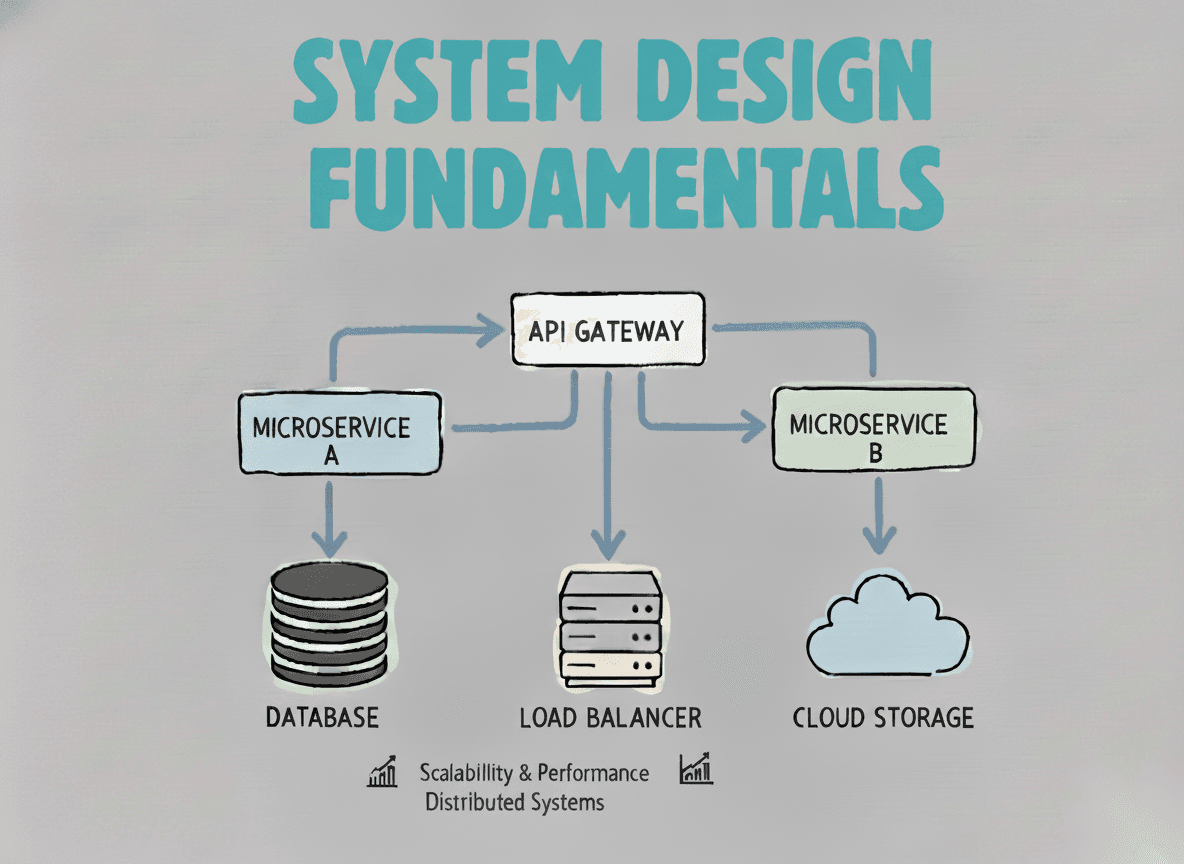
System Design Fundamentals
Build a strong foundation in designing scalable, reliable distributed systems.
View the courseML System Design practice on Codemia
Design recommenders, ranking systems and training pipelines the way ML interviews actually ask for them, with worked solutions.