How to support multiple deployments in a microservice CI/CD pipeline
System Design practice on Codemia
Work through 120+ system design problems with detailed solutions, from rate limiters to multi-region storage.
Supporting multiple deployments in a microservice architecture involves a set of strategies that allow for efficient and reliable Continuous Integration (CI) and Continuous Deployment (CD) across various environments. This is crucial for managing several microservices that might have dependencies on different systems and might require deployment at varied times and frequencies.
Understanding Microservices CI/CD Pipeline
A CI/CD pipeline automates the steps involved in taking software from version control to production. In the context of microservices, each service typically has its own pipeline, which ensures changes can be released independently of changes in other services. This is vital for enabling a scalable, flexible architecture.
Key Components of a Microservices CI/CD Pipeline
- Source Control Management (SCM): Each microservice has its own repository allowing for independent version control.
- Build stage: Compiles code and runs preliminary tests.
- Test stage: Includes Unit Tests, Integration Tests, and possibly Contract Tests.
- Deployment stage: This stage may target different environments (e.g., development, testing, staging, and production).
- Release stage: Manages versioning and the release process, possibly utilizing feature flags for safer deployments.
- Monitoring and Logging: Provides insights into the application performance and issues post-deployment.
Strategies for Supporting Multiple Deployments
1. Environment Segregation
Use different environments for various stages of deployment, such as Development, Testing, Staging, and Production. Each environment should mimic production as closely as possible to ensure reliability.
2. Configuration Management
Manage configuration externally from your microservices. Store environment-specific configurations that can be dynamically loaded during runtime. Popular tools include Spring Cloud Config, Consul, or AWS Parameter Store.
3. Branching Strategy
Employ a branching strategy like Git Flow or trunk-based development. This strategy can influence how and when deployments happen, especially in a multi-environment setup.
4. Canary Releases and Blue/Green Deployments
These strategies allow for testing new versions in the production environment with limited exposure before full rollout. Canary releases involve rolling out the change to a small subset of users, while blue/green deployments switch traffic between two identical environments that only differ by the software version.
5. Service Mesh
Implement a service mesh like Istio or Linkerd to control traffic flow and load balancing, crucial for implementing advanced deployment strategies like canary releases.
6. Containerization and Orchestration
Use Docker for containerization of services, and Kubernetes for orchestration. Kubernetes manages the deployment and scaling requirements of each microservice container across a cluster of servers.
7. Monitoring and Observability
Implement robust monitoring through tools such as Prometheus and Grafana. Ensure that log aggregation (with tools like ELK Stack or Fluentd) captures and correlates logs across services.
Technical Examples
Example: Kubernetes Deployment YAML for Blue/Green Deployment
Change the version label and image tag to manage blue/green deployments effectively by adjusting the service selector of the Kubernetes service definition.
Table Summarizing Key CI/CD Strategies for Microservices
| Strategy | Description | Tools/Techniques |
| Environment Segregation | Use separate environments to stage deployments and catch issues early. | - |
| Configuration Management | Externalize configuration to adapt each service deployment to its environment dynamically. | Spring Cloud Config, Consul |
| Canary Releases | Gradually roll out changes to a subset of users to minimize impact of new versions. | Kubernetes, Istio |
| Blue/Green Deployments | Switch traffic between two identical environments with different software versions. | Kubernetes, Istio |
| Containerization | Package services into containers for consistency across environments. | Docker, Kubernetes |
| Monitoring and Observability | Track performance and errors, and understand detailed behavior of services in production. | Prometheus, Grafana, ELK Stack |
By integrating these strategies, organizations can ensure a more robust, scalable, and maintainable deployment pipeline for microservices, thereby enabling faster innovation cycles and reduced risk in deployment practices.
Related reading
- How to temporarily switch profiles for AWS CLI?
- How to test credentials for AWS Command Line Tools
- How to transfer data from S3 bucket to Kafka
- How to transfer files between AWS s3 and AWS ec2
- How to sync data between master and slave node in distributed systems
- How to synchronize distributed system data across cassandra clusters
- How to suppress verbose Tensorflow logging?
- How to switch namespace in kubernetes
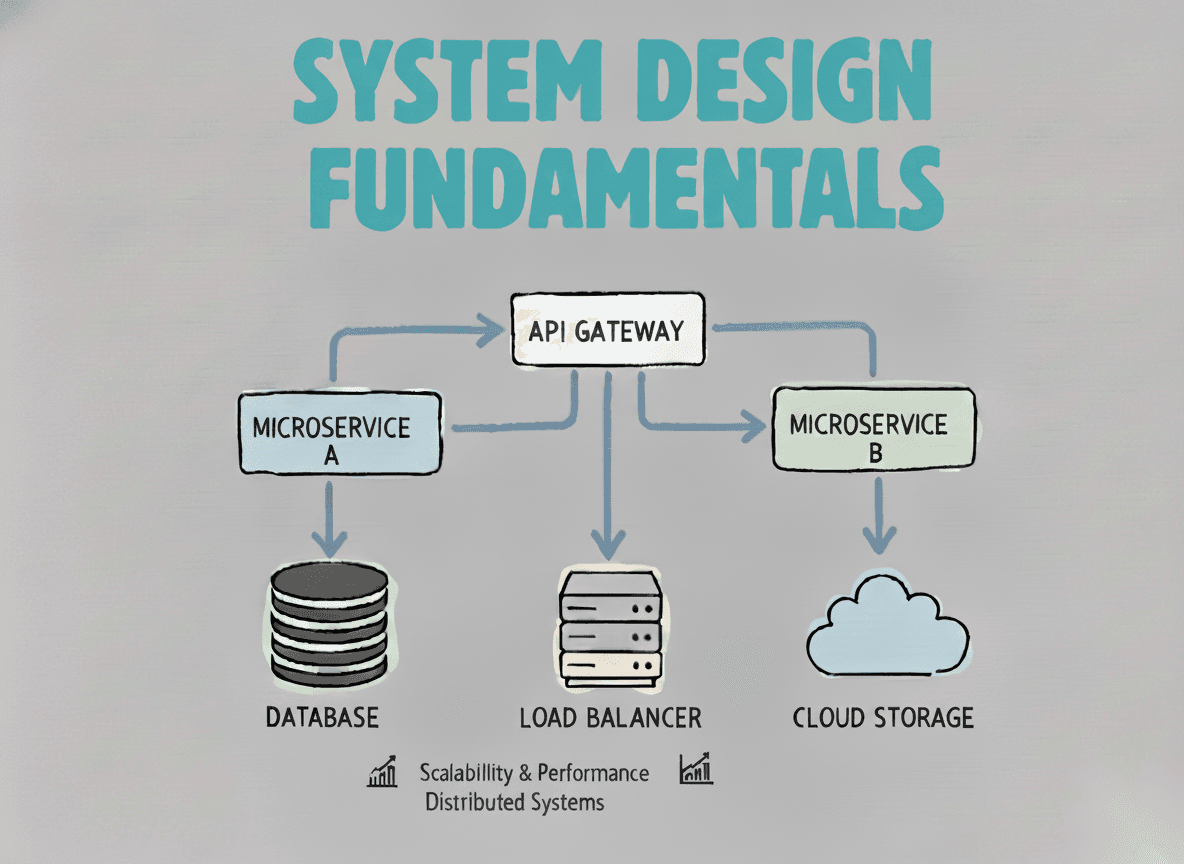
System Design Fundamentals
Build a strong foundation in designing scalable, reliable distributed systems.
View the courseSystem Design practice on Codemia
Work through 120+ system design problems with detailed solutions, from rate limiters to multi-region storage.