Is it still possible for a transaction that involves read and write operations against the replicated database to commit?
System Design practice on Codemia
Work through 120+ system design problems with detailed solutions, from rate limiters to multi-region storage.
In distributed systems, where data is replicated across multiple nodes to enhance availability and performance, it becomes crucial to understand how transactions involving both read and write operations commit successfully, despite potential challenges such as network latency, node failures, and data inconsistencies.
Understanding Transaction Commitment in Replicated Databases
Transactions in a database environment refer to a sequence of operations that should be executed atomically - either all operations succeed, or none occur. When a database is replicated, achieving this atomicity can be more complex due to the multiple copies of data that must be kept consistent.
ACID Properties and Replicated Databases
In database systems, transactions are guided by the ACID properties:
- Atomicity: The transaction is treated as a single unit, which either succeeds completely or fails completely.
- Consistency: The transaction should leave the database in a consistent state, adhering to all defined rules.
- Isolation: Transactions should not be affected by other concurrently running transactions.
- Durability: Once a transaction commits, its results are permanent, even in the event of a system failure.
Ensuring these properties in a replicated setting introduces complexities due to the additional need to synchronize changes across multiple nodes.
Types of Replication
- Synchronous Replication: Every write operation is written to all replicas and must be acknowledged by all (or a majority) before the transaction can be committed.
- Asynchronous Replication: Write operations are completed on the primary node first, and then copied to the replicas, reducing write latency but increasing the chance of data inconsistency following a node failure.
Transaction Commit Protocols
Two-Phase Commit (2PC)
In two-phase commit, the commitment of a transaction across multiple nodes is divided into two phases:
- Prepare Phase: The transaction manager asks participating nodes to prepare to commit.
- Commit Phase: Based on responses from all nodes, if all are ready, the transaction manager instructs them to commit. If any node reports a problem, all nodes are instructed to abort.
Three-Phase Commit (3PC)
An improvement of 2PC, adding an extra phase to avoid some pitfalls like blocking:
- Pre-commit Phase: Participants indicate willingness to commit.
- Commit Phase: If all participants are ready, proceed with the commit.
- Completion Phase: Nodes confirm that the commit has been finalized.
These protocols help ensure that despite failures, the system can recover to a consistent state.
Handling Failures and Recovery
In replicated databases, mechanisms must be in place to handle failures during transactions:
- Node Failures: If a node participating in a transaction fails, recovery protocols like logging and checkpoints help in recovering the node state.
- Network Partitions: Special care is necessary to handle scenarios where some nodes are cut off from the network yet continue to operate.
Case Study: Google Spanner
Google Spanner presents an interesting case of a globally-distributed database that supports externally consistent transactions and synchronous replication. It uses a method known as TrueTime, which relies on tightly controlled clock synchronization to ensure that a transaction's time-stamp order reflects the actual serial order, even across global distances.
Summary Table
| Feature | Role in Replicated Databases | Example |
| Synchronous Replication | Ensures data consistency across replicas | Google Spanner |
| Asynchronous Replication | Improves write performance; risk of inconsistencies | MySQL Replication |
| 2PC & 3PC | Protocols for ensuring atomic commit across nodes | Used in many distributed databases |
| Failure Handling | Ensures recovery to a consistent state | Log-based recovery systems |
Conclusion
In conclusion, transactions involving read and write operations can indeed commit successfully across replicated databases, provided that robust protocols such as 2PC or 3PC are employed and challenges like network partition and node failures are effectively managed. Techniques used by systems like Google Spanner highlight how sophisticated time synchronization and commit protocols enhance the ability to maintain consistency across global-scale distributed databases.
Related reading
- Is it vaild to put the numOwners to more than 1 in Infinispan when shared JDBC cache store is in place?
- Is kafka a good fit for a small scale microservices environment, or should I look for lightweight alternatives
- Is Kafka message headers the right place to put event type name?
- is kafka reliable when used as a message bus in micro services
- Is java.sql.Connection thread safe?
- Is logical replication using pglogical possible with timescaleDB?
- Is there a command to undo git init?
- Is there a command to undo git init?
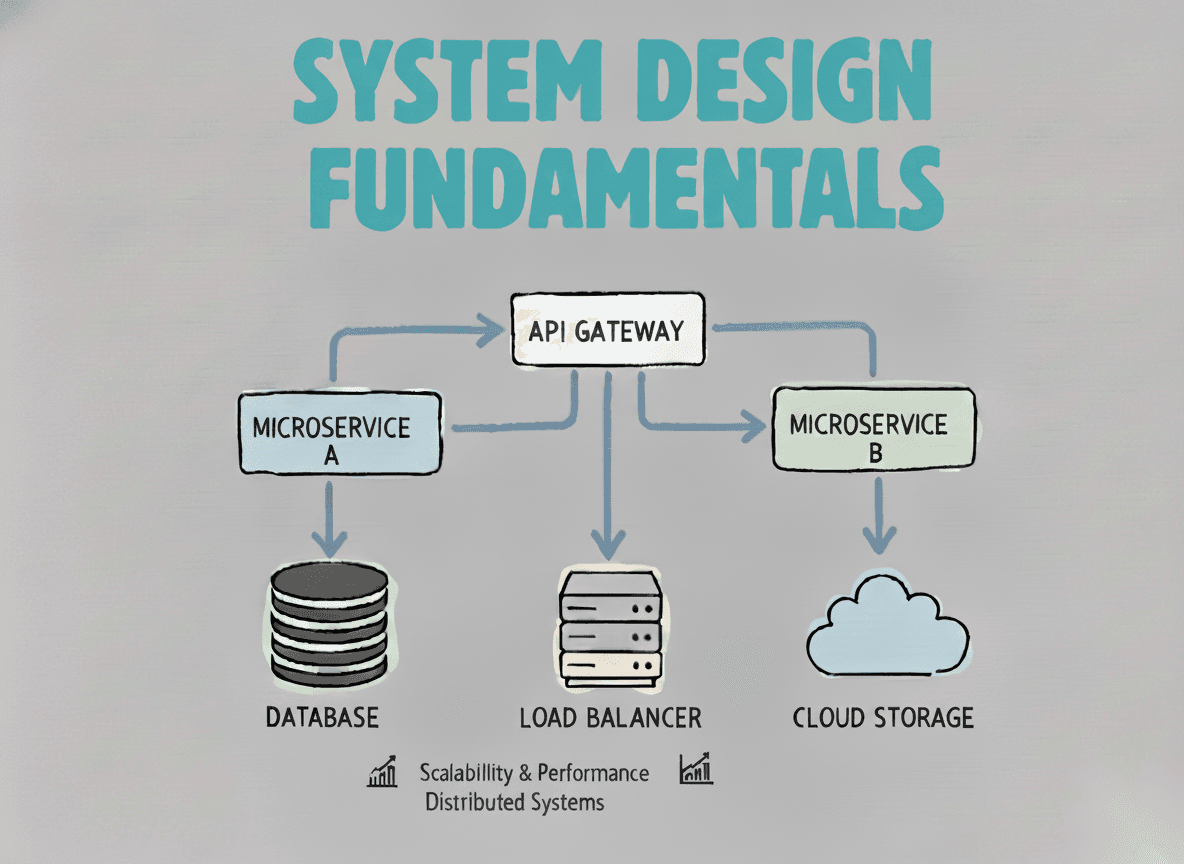
System Design Fundamentals
Build a strong foundation in designing scalable, reliable distributed systems.
View the courseTrack what you have practised
A free account saves your progress, solutions and study plan across every problem on Codemia.
System Design practice on Codemia
Work through 120+ system design problems with detailed solutions, from rate limiters to multi-region storage.