Is MassTransit with Azure Service Bus a good fit for tenant-isolated on-prem agents?
System Design practice on Codemia
Work through 120+ system design problems with detailed solutions, from rate limiters to multi-region storage.
MassTransit is a powerful free, open-source distributed application framework for .NET, which significantly eases the use of message-based architectures. When integrated with Azure Service Bus, it often becomes a potent solution for handling cloud-based messaging and orchestration. Yet, when considering scenarios involving tenant-isolated on-premises agents, several facets must be analyzed to determine the appropriateness of this combined technology stack.
Overview of MassTransit with Azure Service Bus
MassTransit offers high-level abstractions for message-based architecture, making it easier to implement message queues, pub/sub messaging patterns, and long-running sagas. Azure Service Bus, on the other hand, is a fully managed enterprise integration message broker. This platform as a service (PaaS) can facilitate highly reliable and secure message delivery for complex data communication between different software systems, be it in the cloud or on on-premise environments.
Here is how integrating these two can typically look:
- MassTransit acts as a messaging framework, abstracting many of the complexities involved in message handling and orchestration.
- Azure Service Bus serves as the messaging infrastructure, providing robust, enterprise-level messaging services like queuing, publish/subscribe, and advanced message routing.
Considerations for Tenant-Isolated On-Prem Agents
For organizations using on-premises agents that require isolation per tenant (such as in multi-tenant systems where tenants' data must be strictly compartmentalized), several key components must be considered:
- Privacy and Security: Each tenant's data should be protected from access by other tenants. Azure Service Bus supports this with Shared Access Signatures, which can be used to control access at a granular level.
- Scalability: As the number of tenants grows, the system should scale without significant changes. Azure Service Bus can handle millions of operations per second, making it highly scalable.
- Reliability: The message delivery system must be reliable, ensuring messages are never lost. Azure Service Bus provides features like duplicate detection, deferral, and dead-lettering to enhance reliability.
- Latency: For on-prem agents, network latency and intermittent connectivity can be issues. Azure Service Bus offers features like hybrid connections and service endpoints to mitigate these issues.
Technical Implementation
Here’s how an implementation might look like:
In the above snippet, each message could include a tenant ID, ensuring that the consumer processes each message in the tenant's isolated context.
Pros and Cons Table
| Feature | Advantage (+) or Disadvantage (-) |
| Security | + Customizable per tenant with Shared Access Signatures. |
| Scalability | + Handles millions of operations/sec with ease. |
| Complexity | - Requires understanding of both MassTransit and Azure Service Bus to optimize effectively. |
| Cost | - Potentially high depending on throughput and number of operations. |
| Integration with on-prem | +/– Can be complex due to hybrid connection needs but feasible. |
| Latency | +/– Can be optimized but depends on network connectivity. |
Additional Considerations
- Monitoring and Management: Leveraging Azure Monitor and Azure Service Bus metrics can provide insights into operations and help manage resources effectively.
- Disaster Recovery: Azure’s geo-redundancy options can be vital in ensuring high availability and fault tolerance across distributed components.
Conclusion
When evaluating whether MassTransit and Azure Service Bus are suitable for tenant-isolated on-prem agents, it's important to consider the specific requirements and constraints of each tenant alongside the technical capabilities of the tools at hand. While the combination offers a robust, scalable messaging solution, it also demands a nuanced approach to architecture and design to fully leverage its benefits while adhering to stringent isolation and security requirements.
Related reading
- Is multi-AZ RDS really worth it?
- Is the Amazon .NET AWS SDK's AmazonS3 thread safe?
- Is the most recent AWSALB cookie required? AWS ELB Application Load Balancer
- Is the S3 US Standard region the same as us-east-1 in EC2?
- Is there a DynamoDB max partition size of 10GB for a single partition key value?
- Is there a good object mapper for Amazons dynamodbthrough aws sdk which can be used in nodejs?
- Is there a way for cloudformation to query available zones for subnet creation?
- Is there a way to export an AWS CLI Profile to Environment Variables?
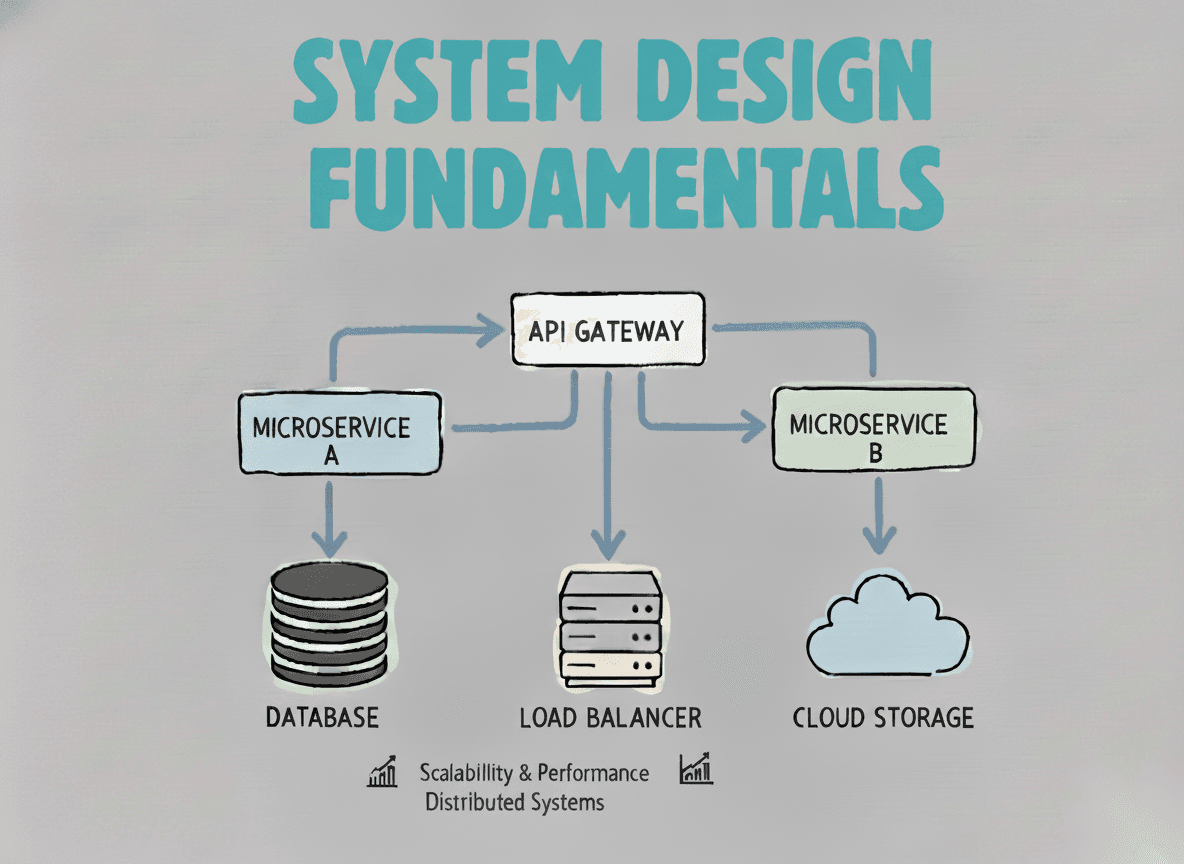
System Design Fundamentals
Build a strong foundation in designing scalable, reliable distributed systems.
View the courseTrack what you have practised
A free account saves your progress, solutions and study plan across every problem on Codemia.
System Design practice on Codemia
Work through 120+ system design problems with detailed solutions, from rate limiters to multi-region storage.